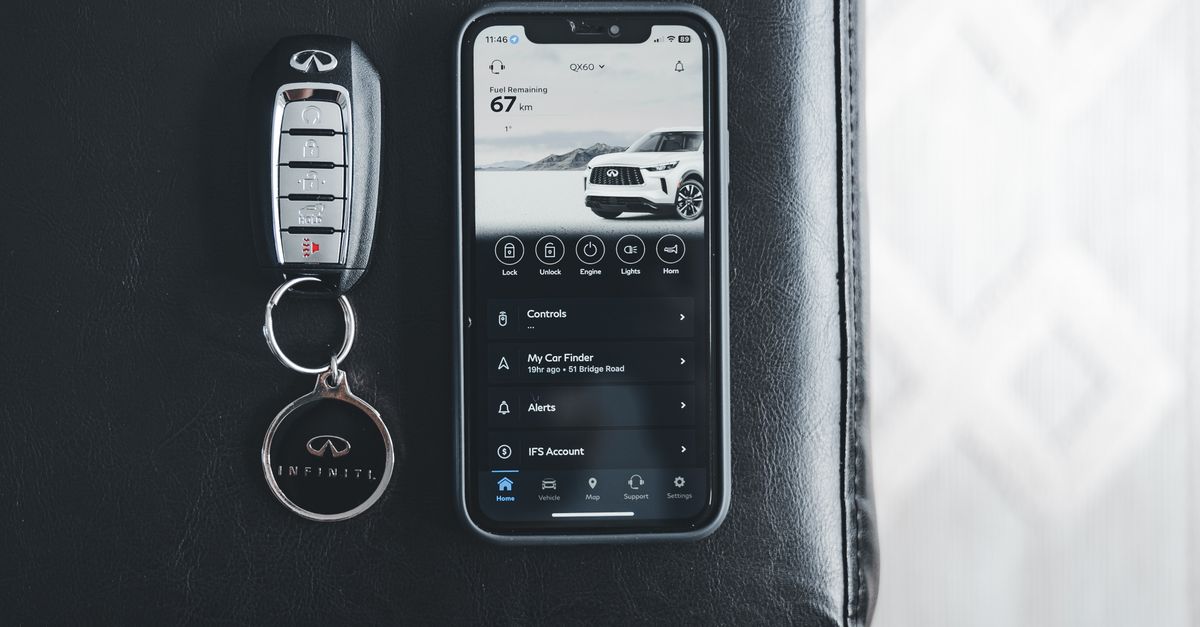
Why Nissan Car Key Replacement Is More Involved Than Most Drivers Expect
Nissan has used transponder key technology across its lineup since the mid-1990s, and the complexity has grown with every model generation. A basic transponder key for an older Altima or Sentra carries a passive chip that must be matched to the vehicle's ECU through a programming sequence — skipping that step produces a key that turns in the ignition but leaves the engine immobilized. Newer models like the Rogue, Murano, Pathfinder, and Maxima use Intelligent Key fobs that communicate with the car via low-frequency radio, enabling push-button start, remote lock and unlock, and in some trims, hands-free liftgate access. These fobs require both cutting to the correct blade profile and bidirectional programming that consumer-grade duplicators simply cannot perform.
Smart keys and Intelligent Key fobs also store pairing data for every key on the vehicle's network. When a new key is added — or when a lost key needs to be removed from that network for security — the entire key set sometimes needs to be re-registered in one session. That is a critical detail that self-service copy-any-key kiosks marketed as covering home, office, car, access cards, and fobs do not advertise on their screen. Our technicians understand Nissan's key architecture model by model, which is why we can serve a Nissan Altima locked-out-of-car call and have a working, programmed replacement ready on the spot.